
Solenoid vs Motor-Driven Dosing Pump: Which One?
Table of Contents
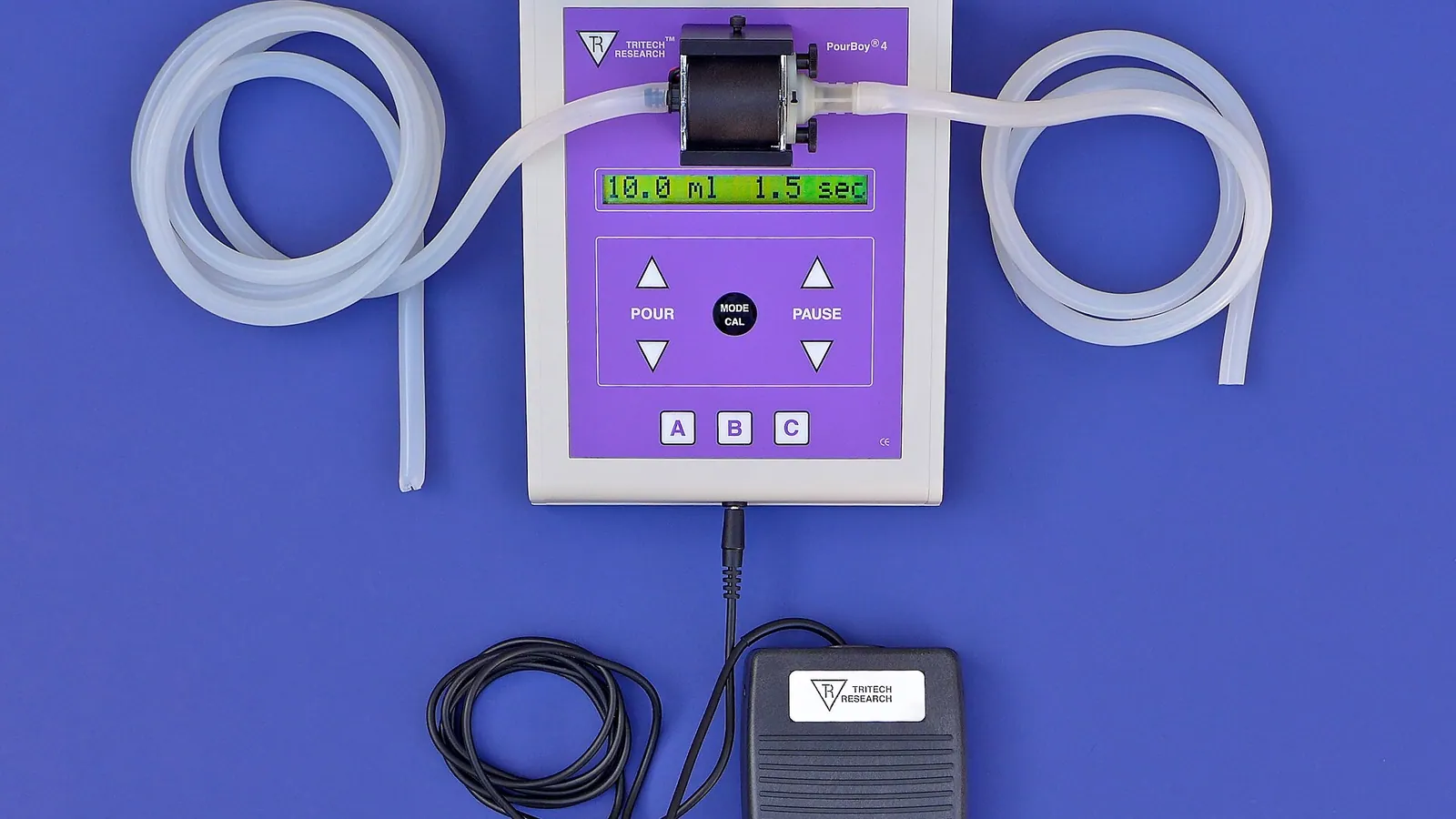
When you are choosing a chemical dosing pump, the first fork in the road is the drive: solenoid or motor. Both are diaphragm pumps — same liquid end, same check valves, same family of spare parts. The difference is how the diaphragm gets its stroke. That difference decides flow range, control options, energy use, purchase price, and which spare parts wear first.
This guide compares the two side by side and ends with a five-question test that settles the choice for most applications.
The Two Drive Technologies
Solenoid (electromagnetic) dosing pumps use a coil that pulls a plunger once per electrical pulse. Each pulse is one stroke. Stroke frequency is set in pulses per minute, and many models accept an external pulse signal from a flow meter — pump proportionally to flow.
Motor-driven dosing pumps use a continuously running electric motor turning an eccentric or gearbox that flexes the diaphragm. Flow is set by stroke length (volume per stroke) and sometimes by motor speed.
The liquid end — diaphragm, suction valve, discharge valve — is functionally identical in both. That is why the same compatible diaphragm and valve cartridge families cover both types across a brand series.
How Each Works
Solenoid cycle: the coil energizes, pulls the armature, flexes the diaphragm and displaces liquid; the coil releases, a spring returns the diaphragm, and suction refills the head. Because the stroke is short and fast, solenoid pumps produce a pulsed discharge — a pulsation dampener is often fitted for smooth dosing.
Motor cycle: the motor runs continuously; an eccentric cam pushes the diaphragm through a mechanical linkage, and a spring returns it. Stroke length is adjusted by moving the eccentric or the connecting rod. Output is smoother, especially with a gearbox that slows the stroke rate.
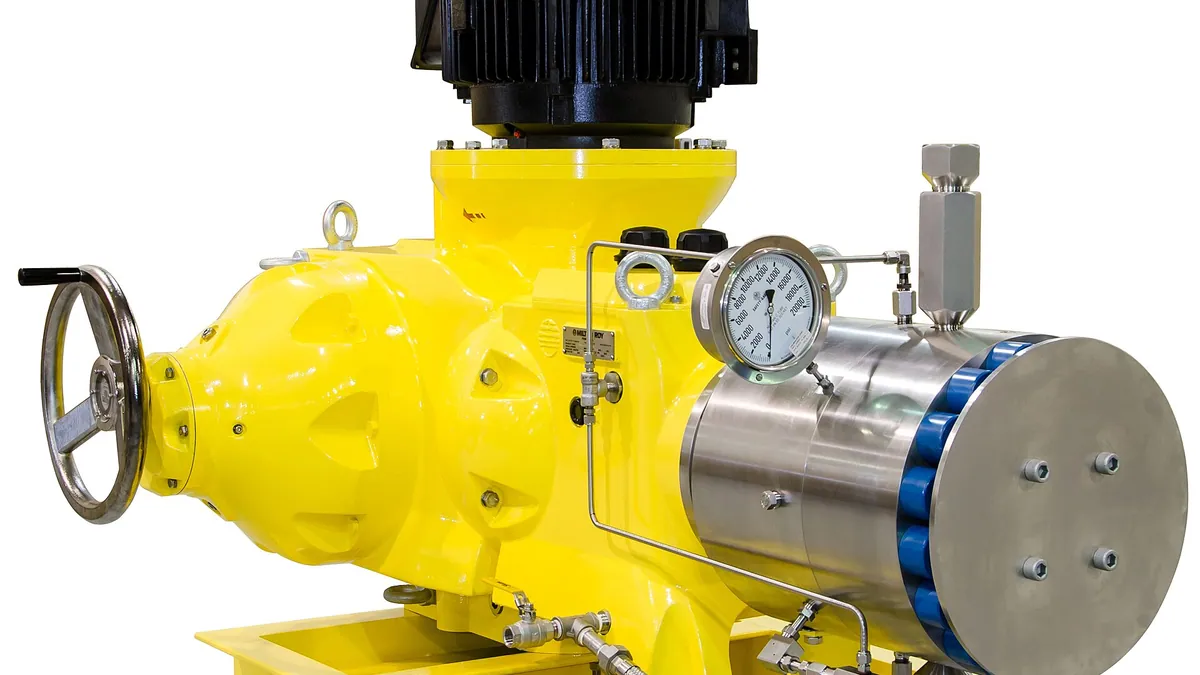
Hydraulic diaphragm pumps are a motor-driven subset: oil behind the diaphragm transfers the piston force, giving the smoothest discharge and the highest pressures, at higher cost.
Flow and Pressure Envelope
| Parameter | Solenoid | Motor-driven |
|---|---|---|
| Typical flow | 0.5 – 30 L/h | 1 – 500+ L/h |
| Max pressure | 10 – 30 bar | 10 – 50 bar (hydraulic: 200+) |
| Stroke rate | 10 – 300 pulses/min | 20 – 120 strokes/min (gearbox limited) |
| Turndown | ~10:1 via rate + length | ~10:1 via length (+ speed on VFD) |
| Accuracy | ±2% typical | ±1% typical |
The envelopes overlap between roughly 1 and 30 L/h — that overlap is where most pool, cooling tower and small water-treatment choices happen. Above 30 L/h or 30 bar, motor-driven is the practical answer; below 5 L/h at low pressure, a solenoid pump is cheaper and simpler.
Control and Automation
- Solenoid: accepts pulse input (from a flow meter, PLC dry contact, or water meter reed switch) for flow-proportional dosing. Analog 4–20 mA models exist but are less common. Setting is digital — buttons or a small display.
- Motor-driven: stroke length is adjusted mechanically (manual knob or electric actuator). For 4–20 mA control, the motor runs on a VFD or the stroke actuator receives the signal. Network options (Modbus, PROFIBUS) are available on industrial models.
Rule of thumb: if your process already has a flow meter and you want dosing proportional to flow, a solenoid pump with pulse input is the simplest, cheapest integration. If you need 4–20 mA analog control or remote stroke adjustment, a motor-driven pump (or an electric-stroke solenoid) is the fit.
Total Cost of Ownership
| Cost item | Solenoid | Motor-driven |
|---|---|---|
| Purchase price | $150 – 600 | $400 – 2500+ |
| Energy use | Very low (pulses only) | Continuous motor load |
| Diaphragm/valve wear | Same consumables, similar life | Same consumables, similar life |
| Service complexity | Simpler (no gearbox/oil) | More parts (motor, gearbox, oil for hydraulic) |
| 5-year TCO | Lower at small flows | Lower at high flows/continuous duty |
At flows under 30 L/h the solenoid pump usually wins on total cost. Above that, motor-driven pumps are the only practical option anyway. The consumable cost — diaphragm and valve cartridges — is the same family of parts in both, so switching drive type does not change your spare-parts stocking strategy much.
Typical Applications Side by Side
| Application | Solenoid | Motor-driven |
|---|---|---|
| Pool & spa chlorine/pH | Dominant choice | Large commercial pools |
| Cooling tower biocide | Side-stream dosing | Main-stream, large towers |
| Municipal water treatment | Small plant, booster dosing | Standard for plant-scale dosing |
| Boiler chemical program | Small boilers | Standard (often hydraulic) |
| Oil & gas chemical injection | Rare | Standard (hydraulic, high pressure) |
| Agriculture fertigation | Drip systems, solar sites | Large pivots, injection pumps |
How to Decide: A 5-Question Test
- What flow do you need? Under 30 L/h → solenoid is viable. Over 30 L/h → motor-driven.
- What pressure at the injection point? Over 30 bar → motor-driven (or hydraulic).
- How will the pump be controlled? Pulse from a flow meter → solenoid is ideal. 4–20 mA/network → motor-driven or electric-stroke solenoid.
- Continuous or intermittent duty? Continuous 24/7 → motor-driven handles it with margin. Intermittent → solenoid saves energy.
- What is your spare-parts discipline? Either way stock the diaphragm, valve cartridges and seal kit for the series. If your plant standardizes on one brand family, both drive types share the liquid-end parts.
If you answered "solenoid" on questions 1–4, buy a solenoid pump. If "motor-driven" on any of 1–3, go motor-driven. The 5th question only refines which series to standardize on.
Spare Parts and Service Differences
The liquid-end consumables — diaphragm, suction and discharge valve cartridges, o-rings and seals — are the same family across both drives for a given brand series. The drive-specific parts differ:
- Solenoid: the coil and electronic board can fail (surge, heat). These are usually replaced as modules, not repaired. Cheap and quick to swap.
- Motor-driven: the motor, gearbox and (for hydraulic) the oil and its seals are the extra wear items. Gearbox oil changes are periodic; hydraulic oil needs checking for contamination, which can be the first sign of a diaphragm leak.
For a plant running both types, stocking the shared liquid-end kit plus one spare coil (solenoid) and one spare gearbox oil fill (motor) covers the realistic failure set.
FAQ
Is a solenoid dosing pump less accurate than a motor-driven one?
Slightly — ±2% versus ±1% typical — but the difference rarely matters in pool, cooling tower or water-treatment dosing. Accuracy is set by the liquid end, not the drive, at mid-stroke settings.
Can a solenoid pump run 24/7?
Yes, within its duty cycle rating. Solenoid coils generate heat; industrial models are rated for continuous pulsing. Check the datasheet's duty rating for your stroke rate.
Do solenoid and motor-driven pumps use the same diaphragm?
Often yes within a brand series — the liquid end is shared. Always confirm by series and model; the diaphragm size and material spec are what matter.
Which is better for flow-proportional dosing?
Solenoid pumps with pulse input are the standard answer — the pump strokes once per flow-meter pulse, so dose tracks flow automatically without a controller.
Why is my solenoid pump pulsing loudly?
Normal at high stroke rates; a pulsation dampener on the discharge reduces noise and smooths flow. If noise changed suddenly, check for air in the head or a failing valve cartridge.
NEXT STEP
Need the Right Metering Pump Part?
Send us your pump model — our team matches the correct part and responds within 24 hours.
Written by
Ray ChanMetering pump parts specialist. Ray helps water treatment plants, chemical plants and maintenance contractors source factory-direct compatible pump parts.