
Diaphragm vs Plunger Metering Pump: How to Choose
Table of Contents
Meta Title: Diaphragm vs Plunger Metering Pumps: Which One for Your Chemical?Meta Description: Diaphragm or plunger metering pump? Compare leak-tightness, pressure range, chemical compatibility, and maintenance cost — with a selection table for common duties.
The Two Workhorses of Metering
Walk through any chemical dosing skid and you will find one of two pump types: a diaphragm metering pump or a plunger metering pump. Both deliver precise volumes of chemical, but they are built for different jobs. Choosing wrong means either paying for pressure you do not need or fighting leaks you cannot stop.
This guide compares the two across the six factors that matter: sealing, pressure, chemicals, flow range, maintenance, and cost. A selection table at the end covers the common duties.
How Each One Works
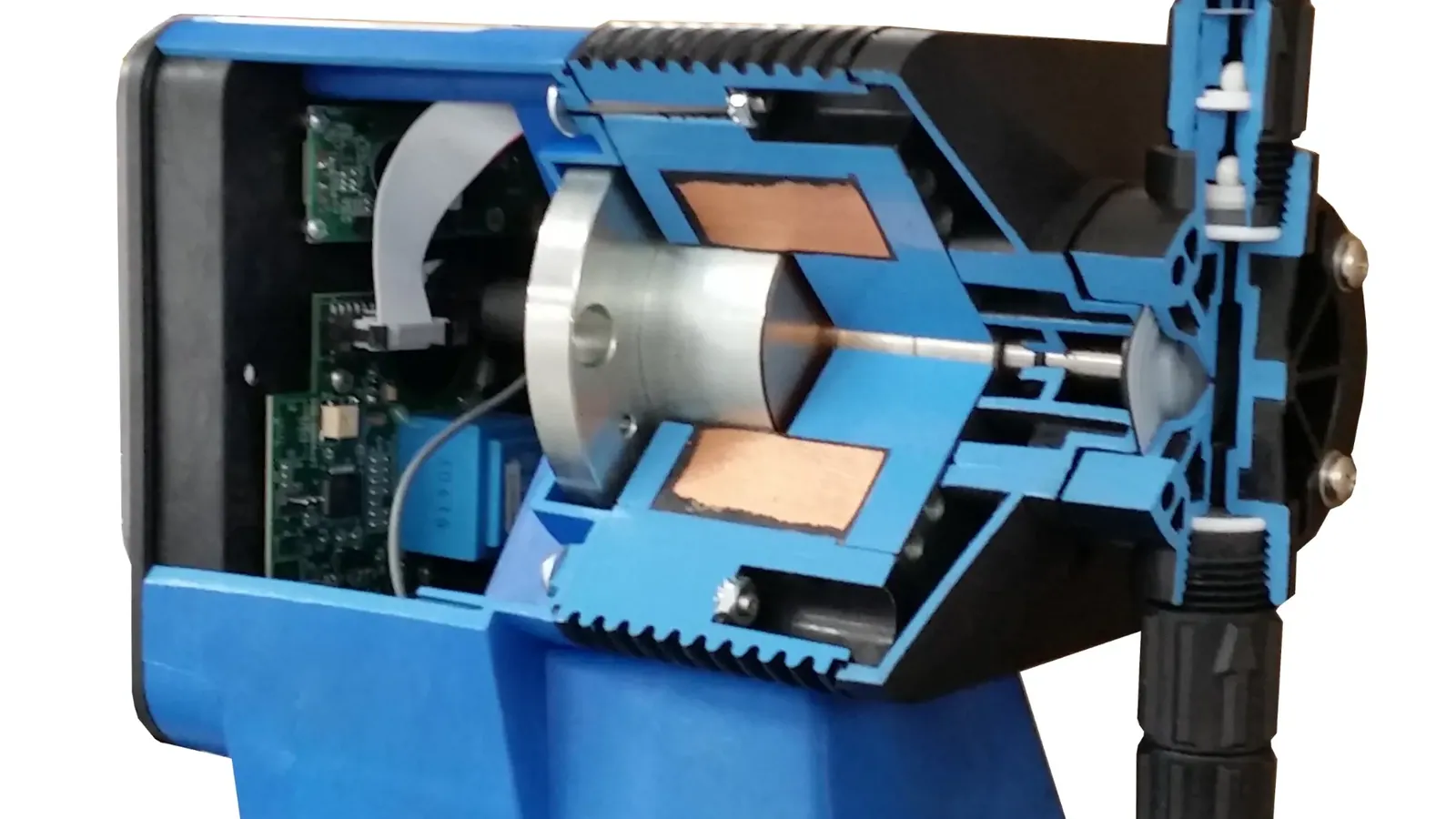
Diaphragm metering pump. A flexible diaphragm (PTFE-faced or EPDM) separates the pumped chemical from the drive mechanism. The diaphragm flexes to displace liquid. Solenoid-driven versions use an electromagnetic coil for stroke power; motor-driven versions use an eccentric and hydraulic oil to push the diaphragm.
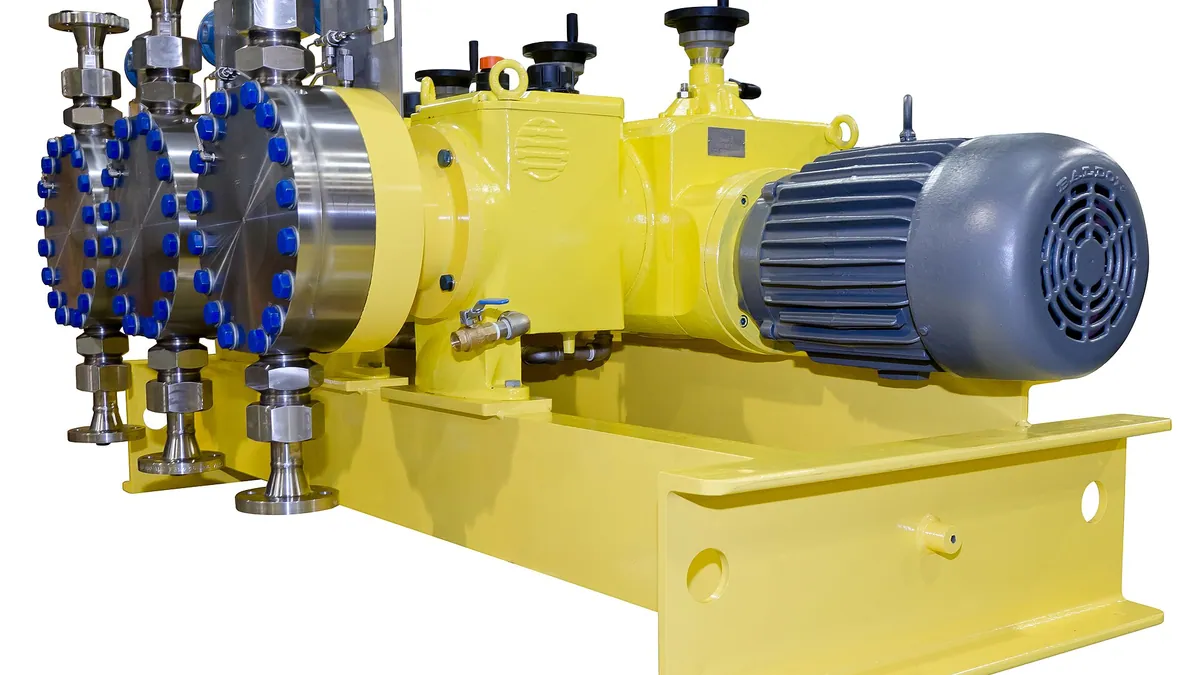
Plunger metering pump. A solid plunger moves in and out of a packed bore, displacing liquid directly. There is no diaphragm — the seal is a packing gland or mechanical seal around the plunger.
1. Leak-Tightness: Diaphragm Wins
| Diaphragm | Plunger | |
|---|---|---|
| Dynamic seals | One (the diaphragm itself) | Packing / mechanical seal |
| Leak risk | Near zero | Packing weeps by design |
| Suitability for toxic chemicals | Yes | Packing leak is a hazard |
The diaphragm pump is the only choice for toxic, carcinogenic, or valuable chemicals. A plunger pump's packing is designed to weep slightly to stay lubricated — that is a feature for water, a liability for hydrofluoric acid.
Rule: if the chemical is dangerous or expensive, diaphragm. No exceptions.
2. Pressure Range: Plunger Wins at the Top End
| Diaphragm | Plunger | |
|---|---|---|
| Typical max pressure | 10–100 bar | Up to 400+ bar |
| Sweet spot | 1–50 bar | 50–400 bar |
Solenoid diaphragm pumps top out around 10–20 bar. Motor-driven hydraulic diaphragm pumps reach 50–100 bar. Plunger pumps handle the high-pressure jobs: boiler feed, wellhead chemical injection, high-pressure wash dosing.
Rule: above 100 bar, plunger is the standard answer.
3. Chemical Compatibility: Material Choice Matters More Than Type
Both types are available in a range of wetted materials. The real difference:
- Diaphragm pumps: wetted parts are plastic (PVC, PP, PVDF, PTFE) or metal with a PTFE-faced diaphragm. Excellent for aggressive acids, oxidizers, and ultrapure water.
- Plunger pumps: wetted parts are usually 316 stainless or alloy. Better for high-temperature chemicals and abrasive slurries, worse for strong acids unless specially rated.
Rule: aggressive acid or oxidizer → diaphragm in PVDF/PTFE. High temperature or slurry → plunger in alloy.
4. Flow Range and Turndown
| Diaphragm | Plunger | |
|---|---|---|
| Typical range | 0.5 mL/h – 20,000 L/h | 1 L/h – 100,000+ L/h |
| Accuracy | ±1–2% | ±0.5–1% |
| Turndown | Good (stroke + speed) | Good (stroke + speed) |
At the very low end (mL/h dosing for labs, micro-injection), diaphragm pumps dominate. At the very high end (large process plants), plunger pumps take over. In the middle band — 10–5,000 L/h — both work, and the decision falls to pressure and chemical factors above.
5. Maintenance: Diaphragm Parts Are Consumables; Plunger Packs Wear Too
Diaphragm pump maintenance- Diaphragm replacement: 6–12 months typical (chemical-dependent) - Valve cartridges: 6–12 months - Hydraulic oil check (motor-driven): monthly - Rebuild time: 30–60 minutes
Plunger pump maintenance- Packing gland adjustment: monthly - Packing replacement: 3–12 months - Plunger surface inspection: every rebuild - Rebuild time: 1–3 hours (packing is fiddlier)
Both are rebuildable. The diaphragm pump's advantage is a rebuild that any operator can do with a PMK kit. The plunger pump's packing replacement rewards an experienced hand.
6. Cost
- Diaphragm metering pump: $200–3,000 typical (solenoid: $200–800; motor-driven: $800–3,000)
- Plunger metering pump: $1,500–10,000+ typical
Diaphragm pumps win on first cost and on rebuild cost. Plunger pumps earn their price only when the duty demands high pressure or high flow.
Selection Table by Common Duty
| Duty | Pressure | Chemical | Recommendation |
|---|---|---|---|
| Pool / spa chlorine dosing | Low | Hypochlorite | Solenoid diaphragm (PVDF) |
| Cooling tower biocide | Low–med | Oxidizer | Solenoid diaphragm |
| Boiler feed water | Med–high | Amine, phosphate | Motor diaphragm or plunger |
| Wellhead chemical injection | High | Corrosion inhibitor | Plunger (alloy) |
| Wastewater polymer flocculant | Low | Polymer | Diaphragm (large) |
| Laboratory micro-dosing | Very low | Various | Solenoid diaphragm (mL/h) |
| High-pressure wash additive | High | Soap/acid | Plunger |
FAQ
Q: Can a diaphragm pump handle high back-pressure?A: Yes, within its rating. Motor-driven hydraulic diaphragm pumps handle 50–100 bar. Check the pressure rating on the liquid end before you size the pump.
Q: Why do plunger pumps weep at the packing?A: Packing needs a thin liquid film to stay cool and lubricated. A perfectly dry plunger pump is usually over-tightened and will burn the packing fast.
Q: Which type is more accurate?A: Both are ±1% class when calibrated. Plunger pumps hold slightly tighter accuracy at high pressure; diaphragm pumps hold it more easily at very low flows.
Q: My diaphragm pump fails every 4 months. Is that normal?A: Not for clean water duty. Check chemical compatibility first — a wrong diaphragm material fails fast. Then check for dry-running, cavitation, and discharge pressure above the pump rating.
Q: Can I convert my plunger system to diaphragm?A: If the pressure is under 100 bar and the flow is in the diaphragm range, yes. Many sites convert for leak-tightness on hazardous chemicals.
Need a diaphragm, valve cartridges, packing, or a preventive maintenance kit for your pump? Send us the pump model, liquid end number, and your chemical — we supply compatible parts for LMI, ProMinent, SEKO, Milton Roy, Pulsafeeder, and most major brands.
NEXT STEP
Need the Right Metering Pump Part?
Send us your pump model — our team matches the correct part and responds within 24 hours.
Written by
Ray ChanMetering pump parts specialist. Ray helps water treatment plants, chemical plants and maintenance contractors source factory-direct compatible pump parts.