
Metering Pump: The Complete Guide
Table of Contents
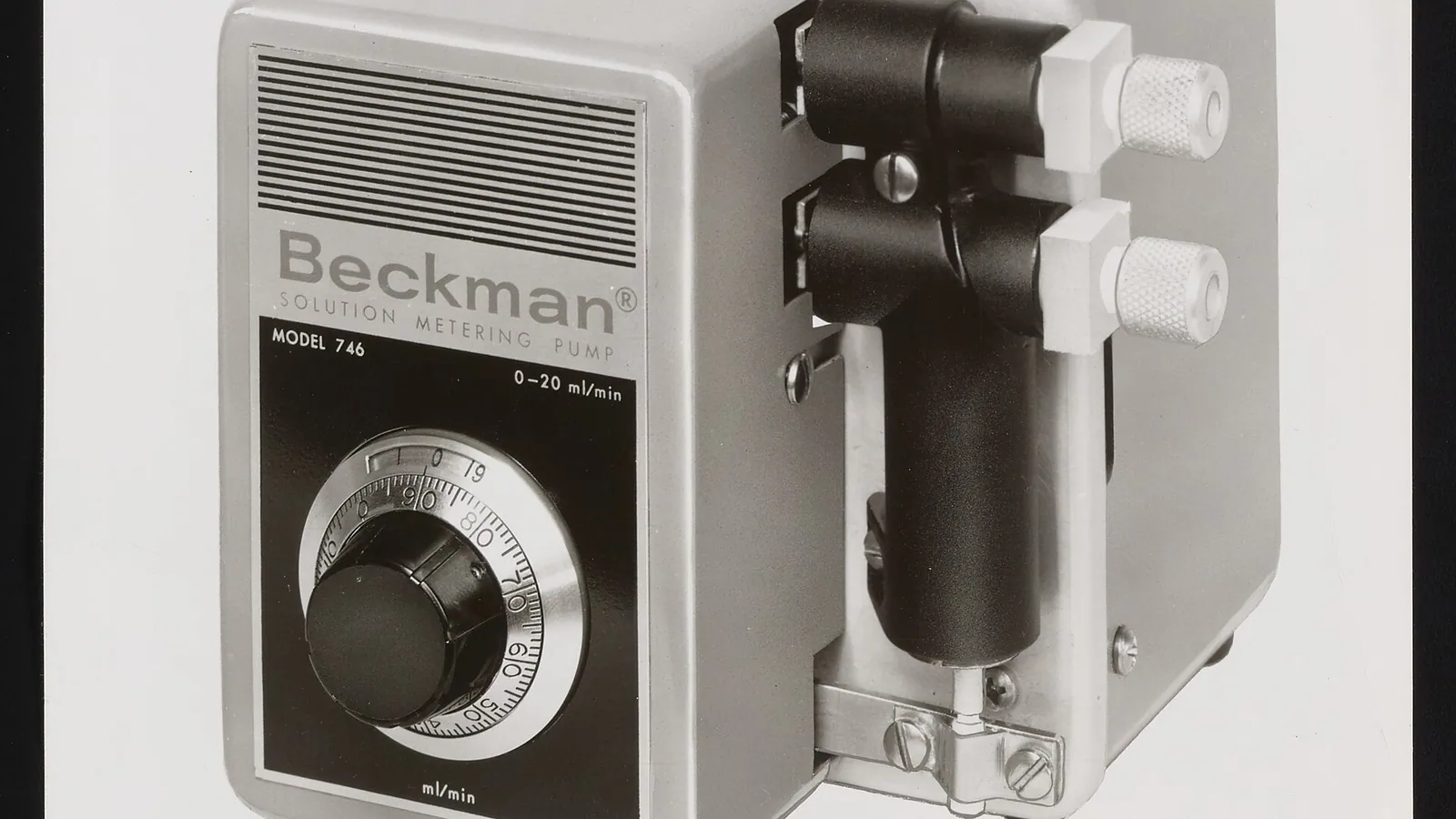
A metering pump delivers a precise, adjustable volume of liquid per stroke or per revolution. In a water treatment plant, a metering pump might add 3.2 liters of sodium hypochlorite per hour with an accuracy of ±1%. In a boiler room, the same class of pump keeps amine dosing within 0.5% of setpoint for months without recalibration. That repeatability is the entire point of the machine.
This guide covers what a metering pump is, how it works, the main types, how to size one, how to match materials to chemicals, and — most importantly for plant operators — what parts wear out and how to replace them without OEM markup.
What Is a Metering Pump?
A metering pump (also called a dosing pump or proportioning pump) is a positive-displacement pump built to move a precisely controlled volume of liquid. The flow rate is adjustable — typically by changing stroke length, stroke frequency, or both — and stays accurate against varying discharge pressure.
Three characteristics separate a metering pump from an ordinary pump:
- Accuracy: repeatability of ±1% or better, even at low flows.
- Adjustability: flow can be changed from near zero to 100% of rating while running.
- Pressure independence: within the pump's range, output volume per stroke stays constant whether the discharge is at 1 bar or 10 bar.
Common terminology: "metering pump" and "dosing pump" describe the same machine. "Chemical injection pump" is the oil-and-gas term. "Proportioning pump" appears in older literature and in some industrial standards.
How Metering Pumps Work: The Positive-Displacement Principle
All metering pumps are positive-displacement machines. A fixed volume of liquid is trapped in a chamber, then displaced by a moving element (diaphragm, plunger, piston, or rotor). Because the displaced volume is fixed per cycle, output is inherently repeatable — unlike centrifugal pumps, where flow depends on head and system resistance.
The operating cycle has two phases:
- Suction stroke: the displacement element retracts, creating a slight vacuum. The suction check valve (ball-and-seat or cartridge) opens, the discharge check valve closes, and liquid fills the chamber.
- Discharge stroke: the element advances, pressure rises, the suction valve closes, the discharge valve opens, and the trapped volume is pushed out.
Two check valves — one on suction, one on discharge — are what make the flow directional. Those valves, along with the diaphragm or plunger seals, are the parts that wear and need periodic replacement. They are also the parts where compatible replacements save the most money.
Main Metering Pump Types
| Type | Drive | Typical Flow | Max Pressure | Accuracy | Best For |
|---|---|---|---|---|---|
| Solenoid diaphragm | Electromagnetic coil | 0.5 – 30 L/h | 10 – 30 bar | ±2% | Pool chlorine, small chemical dosing |
| Motor diaphragm (mechanically actuated) | Electric motor + eccentric | 1 – 500 L/h | 10 – 50 bar | ±1% | Water treatment, boiler chemical |
| Hydraulic diaphragm | Motor + hydraulic oil | 5 – 1000+ L/h | up to 200+ bar | ±0.5% | High-pressure chemical injection |
| Plunger (packed plunger) | Motor + crank | 1 – 2000+ L/h | up to 300 bar | ±0.5% | High pressure, non-abrasive clean fluids |
| Peristaltic (hose/tube) | Motor + rollers | 0.01 – 80 L/h | up to 15 bar | ±2–5% | Abrasives, shear-sensitive, sanitary |
Within each type, manufacturers offer series that share a common liquid-end architecture. For example, LMI's A/B/C/D/E series all use the same family of diaphragms and valve cartridges; ProMinent's Gamma and Concept lines have their own liquid-end layouts; SEKO's Tekna, Kompact and Sprint lines differ in head material and valve style. Knowing the series is the key to ordering the right part.
Key Specifications Explained
- Flow rate (L/h): output at maximum stroke, usually at water and a stated pressure. Real flow with viscous or dense chemicals differs — see sizing below.
- Discharge pressure (bar): the maximum back-pressure the pump can overcome while holding accuracy. Oversizing pressure is common and wasted.
- Stroke length (%) and stroke rate (strokes/min): the two adjustments. Stroke length sets volume per stroke; rate sets frequency. Together they give turndown typically 10:1.
- Accuracy / repeatability: usually ±1% (motor) to ±2% (solenoid) at mid-stroke. At 10% stroke, accuracy degrades — run the pump at 30–90% stroke for best results.
- NPSH required: metering pumps need positive suction head, especially at high stroke rates. Mount the pump below the chemical tank level where possible.
- Materials of construction: liquid-end body (PVC, PVDF, PP, 316L), diaphragm (PTFE-faced, EPDM, Viton, Hypalon), valve balls (ceramic, glass, PTFE, stainless), seals (EPDM, Viton, PTFE). See the compatibility section.
How to Size a Metering Pump
Sizing is a five-step calculation. A worked example follows.
- Define the dose: required chemical concentration × process flow. Example: 2 mg/L chlorine residual in a 50 m³/h water line = 100 g/h active chlorine.
- Convert to product flow: divide by chemical strength and density. 12.5% sodium hypochlorite (density ~1.2) = 100 / 0.125 / 1.2 ≈ 667 mL/h of product.
- Add safety factor: 20–30% above calculated dose for turndown headroom → ~870 mL/h.
- Check pressure: injection point pressure + line losses + a margin. If the injection point is at 6 bar, choose a pump rated ≥ 10 bar.
- Check suction conditions: verify static suction head and avoid vapor pressure issues with warm or volatile chemicals.
Worked example: a cooling tower needs 4 L/h of a 30% biocide at 8 bar injection pressure. A solenoid diaphragm pump rated 5.5 L/h @ 10 bar covers it, but if the chemical is warm (35°C) or the suction line is long, a motor-driven pump with higher NPSH margin is the safer choice. Selecting the pump is step one; selecting the liquid-end material is step two.
Sizing mistakes that come back to bite:
- Oversizing flow: a pump rated 20 L/h running at 10% stroke holds ±2% accuracy poorly. Buy a pump whose normal duty sits at 40–80% stroke.
- Undersizing pressure: a pump rated 6 bar cannot hold accuracy against a 7 bar injection point — the discharge valve never seats properly and flow drifts.
- Ignoring viscosity: a 50 cP chemical needs a larger suction line and possibly a higher NPSH pump. Check the manufacturer's viscosity correction factor.
- Forgetting turndown: dosing needs change seasonally (biocide in summer, none in winter). Size for the full operating envelope, not just today's setpoint.
- Neglecting spare parts: a diaphragm, valve cartridge set and seal kit for the chosen pump model should be purchased with the pump, not after the first failure.
Metering Pump Selection Decision Tree
When the specification is ready, the type choice follows a simple decision tree:
- Flow under ~30 L/h and pressure under ~30 bar? → Solenoid diaphragm pump. Cheapest, easiest to control, ideal for pool, small water treatment, cooling tower side-stream dosing.
- Flow 30–500 L/h or pressure 30–50 bar? → Motor-driven mechanically actuated diaphragm pump. The industrial workhorse.
- Pressure above 50 bar, or extremely accurate high-pressure injection? → Hydraulic diaphragm or packed plunger pump. Oil & gas wellhead injection, boiler chemical programs at high pressure.
- Abrasive, shear-sensitive, or sanitary fluid? → Peristaltic pump. No check valves to clog, gentle on the fluid, easy hose replacement.
- Chemical is clean, high-pressure, and a small leak is tolerable? → Packed plunger. Highest pressure per dollar, but the packing needs attention.
For roughly 80% of water-treatment and industrial dosing duties, the answer is a diaphragm pump — which is why the diaphragm pump market and the compatible-diaphragm parts market are both large and stable.
Materials and Chemical Compatibility
| Chemical | Body | Diaphragm | Valve balls | Seals |
|---|---|---|---|---|
| Sodium hypochlorite (bleach) | PVC / PP | PTFE | Ceramic | EPDM / Viton |
| Ferric chloride | PVDF | PTFE | Ceramic / PTFE | PTFE / Viton |
| Sulfuric acid 93% | PVDF | PTFE | PTFE / Glass | PTFE |
| Caustic soda 50% | PP / PVDF | PTFE / EPDM | Ceramic / Glass | EPDM |
| Polymer flocculants | PP / PVC | EPDM / PTFE | Ceramic | EPDM |
| Amine (boiler treatment) | 316L / PP | PTFE | Ceramic | Viton |
Two rules dominate: PTFE-faced diaphragms are the default for aggressive chemicals, and never guess compatibility — check a compatibility chart for the exact concentration and temperature. A diaphragm rated for 12.5% hypochlorite at 25°C is not automatically fine at 45°C.
Common Applications
- Water treatment: chlorine, pH adjustment, fluoride, coagulant dosing. Hundreds of pumps per plant; accuracy drives permit compliance.
- Boiler and steam: phosphate and amine dosing against high pressure. Hydraulic diaphragm pumps are typical.
- Cooling towers: biocide, scale inhibitor, corrosion inhibitor. Solenoid pumps dominate.
- Pool and spa: chlorine and pH control. Small solenoid pumps with 10–20 L/h output.
- Oil and gas: corrosion inhibitor, scale inhibitor, demulsifier injection at wellheads — high-pressure hydraulic diaphragm pumps.
- Food and beverage: CIP chemical dosing and additive injection, often peristaltic or sanitary diaphragm designs.
- Agriculture: fertigation and chemigation in irrigation systems.
Every one of these applications consumes the same class of wearing parts: diaphragms, valve cartridges, seal kits and o-rings. That is the demand side of the compatible-parts market.
Metering Pump Maintenance and Consumable Parts
A metering pump is a low-maintenance machine, but not a no-maintenance machine. The parts that fail in order of frequency:
- Diaphragm (PTFE-faced): flexes millions of times; fatigue, chemical attack and abrasive particles cause pinholes. Typical life 12–24 months depending on duty. Symptom: output drops, or chemical appears in the drive housing.
- Valve cartridges (balls and seats): crystallized chemical, debris or worn seats cause erratic flow. This is the most common cause of "pump runs but no chemical."
- Suction/discharge tubing and fittings: harden, crack or loosen; air ingress destroys prime.
- Seals and o-rings: degrade with chemical exposure and temperature.
- Oil (hydraulic diaphragm pumps): contaminated or low oil changes diaphragm behaviour.
Preventive maintenance kit (PMK) is the industry-standard bundle: diaphragm, valve cartridge, o-rings and seals for one service interval. Most manufacturers publish a PMK part number per pump model. Keeping a PMK on the shelf is cheaper than emergency sourcing after a diaphragm failure at 2 a.m.
Compatible Parts: What to Look For
Genuine OEM parts are expensive and slow to source for older or less common models. Compatible (aftermarket) parts address that market. What to check before buying compatible parts:
- Material parity: the replacement diaphragm must be the same polymer construction (e.g., PTFE-faced with EPDM backing) as the OEM part, not just the same shape.
- Dimensional identity: bolt-hole pattern, outer diameter, thickness and valve seat geometry must match. A 0.5 mm mismatch causes leaks or jamming.
- Series and model match: parts are specified by pump series (LMI A-series vs B-series; ProMinent Gamma vs Concept), not by brand alone.
- Supplier quality control: ask for batch certificates, and test one sample before committing a full order.
Compatible parts for LMI, ProMinent, SEKO, Milton Roy, Pulsafeeder and Walchem pumps cover the vast majority of installed base. A well-stocked compatible-parts supplier keeps diaphragms, valve cartridges and PMK kits for the common series in stock and can cross-reference by pump model.
Brand-by-Brand Parts Compatibility Reference
| Brand | Common Series | Typical Diaphragm | Typical Valve Cartridge | Notes |
|---|---|---|---|---|
| LMI (Flowserve/Milton Roy) | A, B, C, D, E, P | PTFE-faced, 55–125 mm | Ceramic ball, PVC/PVDF seat | Huge installed base; parts cross-referenced by 4-digit model suffix |
| ProMinent | Gamma/L, Concept, EXTRONIC, delta | PTFE-faced, multi-layer | Ceramic/glass ball | Gamma/L series dominates pool and light industrial |
| SEKO | Tekna, Kompact, Sprint, KCL | PTFE/EPDM faced | Ceramic ball, PP/PVDF | Tekna series very widely installed in Europe and Asia |
| Milton Roy | mRoy, Milroyal, Centrac | Hydraulic or PTFE-faced | Ceramic/SS | Industrial and oil & gas; check drive type |
| Pulsafeeder | Pulsatron, Chem-Tech | PTFE-faced | Ceramic ball | Pulsatron = solenoid; Chem-Tech = motor |
| Walchem (Iwaki America) | EWN, EZG, WebMaster | PTFE-faced | Ceramic ball | Common in US water treatment |
When ordering compatible parts, quote the pump model from the nameplate — it encodes the series, head material, and diaphragm size. If the nameplate is gone, measure the diaphragm outer diameter and bolt pattern; a good supplier matches from measurements.
The Economics of Compatible Parts
Why do plants buy compatible diaphragms and valve cartridges? The numbers are hard to ignore:
- OEM diaphragm pricing: typically $40–120 per diaphragm for a solenoid-series pump, depending on brand and size.
- Compatible equivalent: typically 30–60% lower for the same material and dimensions.
- PMK kits: an OEM preventive maintenance kit (diaphragm + valves + seals) can be $80–200; compatible kits undercut that while covering the same parts.
- Stocked availability: compatible suppliers stock the high-turnover sizes, so a plant avoids waiting 2–6 weeks for an OEM import.
The trade-off to manage is quality assurance. A reputable compatible supplier provides material certificates, batch traceability, and a clear return policy on dimension mismatches. Buy from suppliers who can name the OEM equivalent and the material spec — that is the difference between a parts trader and a parts manufacturer.
Metering Pump Troubleshooting Quick-Reference Table
| Symptom | Likely Cause | Check / Fix |
|---|---|---|
| Pump runs, no output | Lost prime; stuck valve; failed diaphragm | Re-prime; clean/replace valve cartridges; inspect diaphragm |
| Output below setpoint | Worn valve balls; diaphragm pinhole; suction line leak | Calibrate; replace valves; tighten suction fittings |
| Erratic flow | Debris in head; air in line; valve seat damage | Flush head; check suction lift; replace cartridge set |
| Chemical in drive housing | Diaphragm rupture | Replace diaphragm immediately; check for overpressure cause |
| Loss of prime overnight | Suction leak; valve seat leakage; diaphragm creep | Test suction line; replace valves; check diaphragm |
| High discharge pulsation | Pulsation dampener empty/failed; stroke too slow | Recharge dampener; check stroke setting |
| Motor runs hot / trips | Overpressure; seized mechanism; wrong voltage | Check discharge valve; inspect drive; verify supply |
Print this table and keep it with the pump manual. Most metering pump downtime is caused by four consumable parts — diaphragm, valve cartridges, seals, and suction tubing — all of which are cheap to stock and quick to replace.
Preventive Maintenance Schedule and Stocking Guide
A written maintenance schedule turns metering pump upkeep from a crisis-driven activity into a predictable one. The interval below is typical for continuous chemical service; double it for light duty, halve it for abrasive or high-temperature chemicals.
| Interval | Check / Action |
|---|---|
| Weekly | Verify output vs setpoint; check for external leaks; inspect suction tubing for air bubbles or hardening |
| Monthly | Calibration check with a calibration pot; clean strainer/filter; verify injection point check valve |
| Quarterly | Inspect diaphragm for pinholes/crazing; test valve cartridge seating; check oil level (hydraulic pumps) |
| Annually | Replace diaphragm + valve cartridges + seals (PMK kit); replace suction/discharge tubing; full calibration |
Minimum spare-parts stock for one pump:
- 1 × diaphragm (correct material and series)
- 1 × valve cartridge set (suction + discharge)
- 1 × seal/o-ring kit
- 1 × spare suction and discharge tubing with fittings
- 1 × calibration pot (shared across multiple pumps is fine)
For a plant running ten or more pumps of the same brand family, standardizing on one or two series across the site cuts spare inventory by roughly half — one common diaphragm and valve cartridge stock covers every pump. That standardization is also the strongest argument for buying compatible parts: a single parts supplier can cover the whole fleet.
How to Calibrate a Metering Pump
Calibration is the only way to know whether a metering pump is actually delivering the setpoint. Two methods cover the field:
Method 1 — Calibration pot (recommended): install a graduated column or pot on the suction line. Close the tank valve, run the pump for a timed period (1–5 minutes), and read the volume change on the graduations. Compare against the theoretical output: measured ÷ theoretical × 100 gives the percent accuracy. If it drifts beyond ±2–3%, check the valve cartridges and diaphragm before re-calibrating.
Method 2 — Measuring cylinder and stopwatch: disconnect the discharge line, run into a 100–1000 mL graduated cylinder for a timed minute, and read the volume. This method is quick but does not include injection-point back-pressure effects, so use it as a shop check and the pot method for final acceptance.
Calibration frequency: monthly for accuracy-critical service (permit limits, quality specs), quarterly for general dosing, and always after any liquid-end service. Log every calibration — trends in declining output are the earliest warning of a wearing diaphragm.
Where to Buy Metering Pump Parts: A Buyer's Checklist
Whether you buy OEM or compatible, the purchasing checklist is the same:
- Identify the exact model from the nameplate (brand, series, model code, serial). If unavailable, measure the diaphragm OD, bolt pattern and thickness.
- Confirm the wetted materials against your chemical — body, diaphragm facing, valve ball, seals.
- Request a cross-reference: the supplier should name the OEM part number they are matching, not just "fits LMI."
- Check lead time: stock items ship same-day; made-to-order diaphragms can take 2–4 weeks. Keep PMK kits in stock for critical pumps.
- Buy a sample first for a new supplier: verify fit and material before ordering volume.
- Keep batch records: note the supplier, date, and batch for traceability in audits.
A metering pump's total cost of ownership is dominated by consumables over its 10–15 year life. Buying quality compatible parts with verified materials — and keeping them in stock — is the single biggest lever a plant has to reduce that cost.
Summary: What to Remember
Five takeaways from this guide:
- A metering pump is a positive-displacement machine — accuracy, adjustability and pressure independence are its defining traits.
- Diaphragm pumps cover roughly 80% of dosing duties; choose solenoid for small flows, motor-driven for industrial, hydraulic for high pressure, peristaltic for abrasives.
- Size on flow, pressure, suction conditions and turndown — running a pump at 10% stroke wastes accuracy.
- Diaphragm, valve cartridges, seals and tubing are the consumables. Replace them on a schedule, not after failure.
- Compatible parts cut consumable cost 30–60% when materials and dimensions are verified against the OEM spec.
Whether you maintain two pumps at a pool or two hundred across a plant, the maintenance principles are identical — and the spare parts that keep them online are the same family of diaphragms, valve cartridges and seals. Knowing your pump series, stocking a PMK kit, and calibrating on a schedule will keep your dosing accurate for years.
FAQ
What is the difference between a metering pump and a dosing pump?
No functional difference — the terms are synonyms. "Dosing pump" is more common in water treatment and pool markets; "metering pump" is the industrial and API term.
How accurate is a metering pump?
Typically ±1% for motor-driven and ±2% for solenoid-driven pumps at mid-stroke. Accuracy degrades at very low stroke settings, so size the pump so normal duty runs at 30–90% stroke.
How often should a metering pump diaphragm be replaced?
Every 12–24 months under normal chemical service, or per the manufacturer's PMK interval. Replace immediately if output drops or chemical appears in the drive housing.
Why is my dosing pump not delivering chemical?
The usual causes are: air in the head (lost prime), a stuck or worn suction/discharge valve ball, a failed diaphragm, or a blocked injection point. See our priming and pressure troubleshooting guides.
Can I use a compatible diaphragm instead of OEM?
Yes, if the material and dimensions match the OEM specification. Compatible parts from a quality supplier are the standard way plants cut maintenance cost without sacrificing performance.
Do I need a calibration pot?
For accuracy-critical dosing (permit limits, quality specs), a calibration pot or column is the standard way to verify actual output. It measures delivered volume over time, catching worn diaphragms and valves before they cause non-compliance.
NEXT STEP
Need the Right Metering Pump Part?
Send us your pump model — our team matches the correct part and responds within 24 hours.
Written by
Ray ChanMetering pump parts specialist. Ray helps water treatment plants, chemical plants and maintenance contractors source factory-direct compatible pump parts.