
How to Choose a Chemical Dosing Pump: Sizing, Materials, and Type Selection
Table of Contents
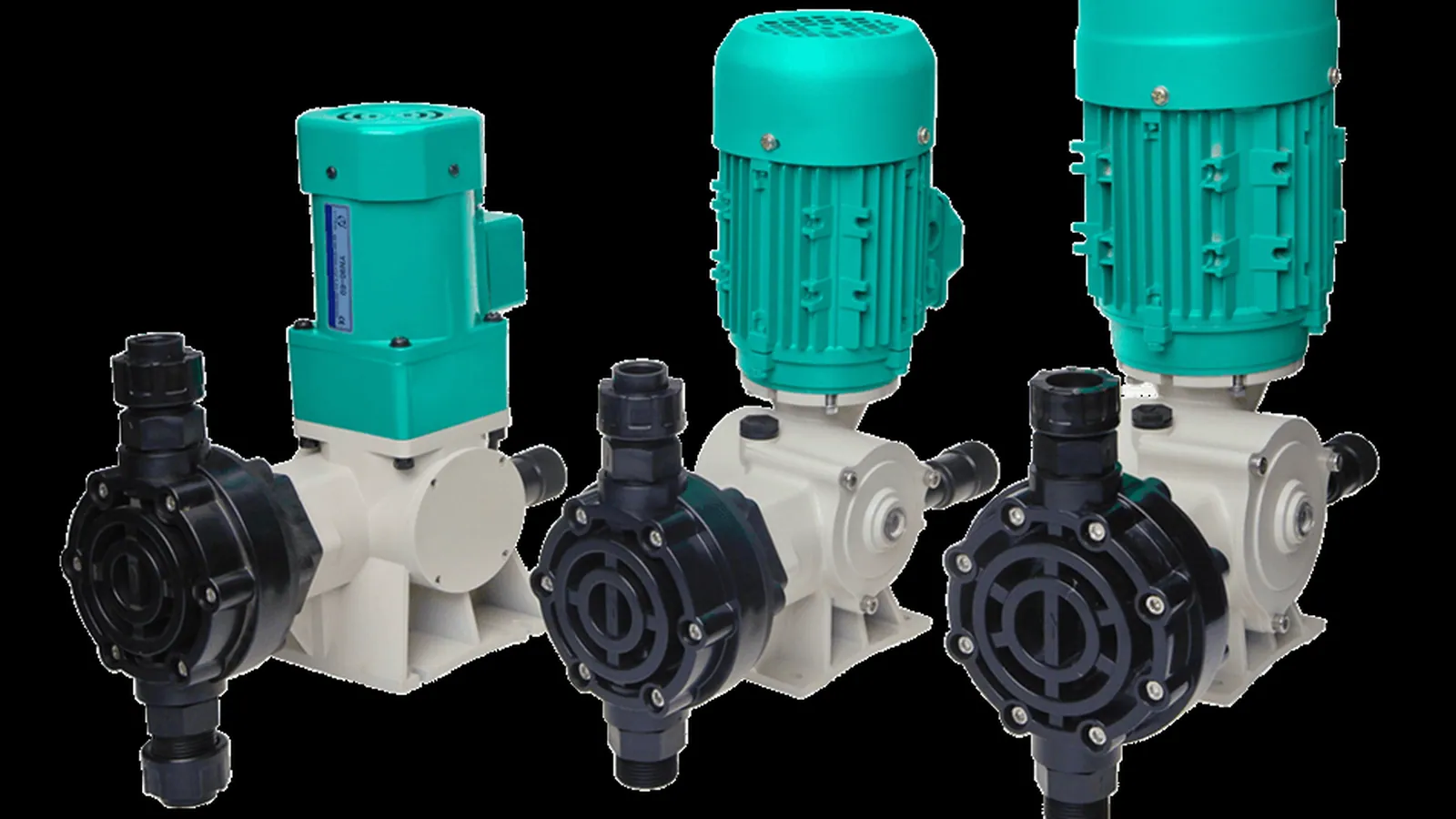
Meta Title: How to Choose a Chemical Dosing Pump: A Practical Selection GuideMeta Description: Flow, pressure, chemical, and duty cycle — here's how to pick the right dosing pump type, size, and wetted materials, with a 5-step selection method.
Choosing a Dosing Pump Is Not Hard — It's Sequential
Most dosing pump selection mistakes come from skipping steps: picking a pump before knowing the flow, or picking a material before knowing the chemical. Work the selection in order — duty, flow, pressure, materials, then type — and the choice narrows itself.
This guide gives you the five-step method we use when quoting pumps, with the numbers you need at each step.
Step 1: Define the Duty
Write down three things before you look at any pump:
- The chemical — name, concentration, temperature
- The dose rate — how much chemical per hour or per day
- The injection point pressure — what back-pressure the pump must overcome
These three numbers decide everything downstream. If you only have a daily dose (e.g., 5 liters of biocide per day), convert it to mL/min before going further.
Step 2: Size the Flow
Dosing pumps are rated in L/h or mL/min at their rated pressure. Two rules:
- Size at 60–80% of the pump's max output, not at 100%. You want headroom for stroke adjustment and future dose changes.
- Check the turndown. If your dose range is wide (2 L/h minimum to 20 L/h maximum), you need a 10:1 turndown pump, not a fixed-speed model.
| Dose needed | Pump rating to buy |
|---|---|
| 1 L/h | 1.5–2 L/h pump |
| 10 L/h | 12–15 L/h pump |
| 100 L/h | 130–150 L/h pump |
Step 3: Confirm the Pressure
The pump's pressure rating must exceed the maximum back-pressure at the injection point — including cold-start conditions and line friction.
| Application | Typical back-pressure |
|---|---|
| Pool chlorine injection | 1–3 bar |
| Cooling tower dosing | 2–6 bar |
| Boiler feed | 10–40 bar |
| Wellhead chemical injection | 50–350 bar |
Common mistake: sizing pressure from the pump's own discharge instead of the injection point. A pump rated at 10 bar can still fail if the injection point sits at 12 bar with line losses.
Step 4: Match Wetted Materials to the Chemical
This is where most field failures start. Match the wetted parts — head, diaphragm, valves, seals — to the chemical, not to the pump brand.
| Chemical | Head material | Diaphragm | Seals |
|---|---|---|---|
| Sodium hypochlorite | PVDF | PTFE | PTFE |
| Hydrochloric acid | PVDF / PP | PTFE | PTFE / EPDM |
| Sodium hydroxide | PP / PE | PTFE | EPDM |
| Polymer flocculant | PP / SS | EPDM | EPDM |
| Amine (boiler) | SS | PTFE | PTFE / Viton |
| Diesel / oil additives | SS | PTFE | Viton |
Rule of thumb: if you are not sure about compatibility, ask for a material compatibility chart with the pump quote. Never guess on oxidizers — hypochlorite attacks EPDM and many plastics quickly.
Step 5: Pick the Pump Type
Now the type choice falls out of steps 1–4:
| Condition | Pump type |
|---|---|
| Low pressure, corrosive chemical, low flow | Solenoid diaphragm pump |
| Medium pressure, high flow, aggressive chemical | Motor-driven diaphragm pump |
| High pressure (>100 bar) or very high flow | Plunger pump |
| Shear-sensitive chemical (polymer) | Peristaltic pump |
| Remote / solar / no power | Water-driven or solar dosing pump |
If the chemical is toxic and must not leak, diaphragm beats plunger every time. If the pressure is over 100 bar, plunger is the standard.
Selection Worksheet (Copy This)
Chemical: ______________  Concentration: ________  Temp: ______
Dose rate: ________ L/day = ________ mL/min
Max back-pressure at injection: ________ bar
Duty: continuous / intermittent / seasonal
Power available: 110V / 220V / solar / water pressure
Wetted material preference: ________
Budget: $______
FAQ
Q: Can I oversize the pump and turn it down?A: Yes, within limits. Most diaphragm pumps hold accuracy down to 10–20% of max output. Beyond that, stroke control gets unreliable — size to the 60–80% rule instead.
Q: What does turndown mean on a dosing pump spec?A: It is the ratio of max to min controllable output, e.g., 10:1 means the pump delivers 10–100% of rating with stable accuracy.
Q: Do I need a pulsation dampener?A: For diaphragm pumps feeding instruments or sensitive processes, yes — a dampener smooths the flow pulse and protects downstream components. For simple tank dosing, usually not.
Q: How do I know if my chemical is compatible with PTFE?A: PTFE is compatible with almost everything except molten alkali metals and a few fluorinated solvents. For the wetted head (PP/PVDF/SS), check the specific chemical — PVDF handles most aggressive acids and oxidizers.
Need help sizing a pump, or looking for compatible spares and maintenance kits for an existing LMI, ProMinent, SEKO, Milton Roy, or Pulsafeeder unit? Send us your duty numbers and pump model — we'll confirm compatibility and lead time.
NEXT STEP
Need the Right Metering Pump Part?
Send us your pump model — our team matches the correct part and responds within 24 hours.
Written by
Ray ChanMetering pump parts specialist. Ray helps water treatment plants, chemical plants and maintenance contractors source factory-direct compatible pump parts.